Before the Booth: How Restoration Began in Barns and Backyards
The Scent of Stale Oil and Perseverance
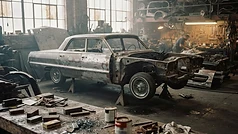
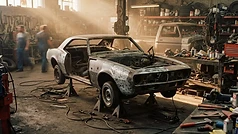
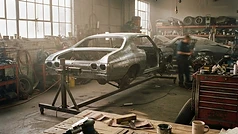
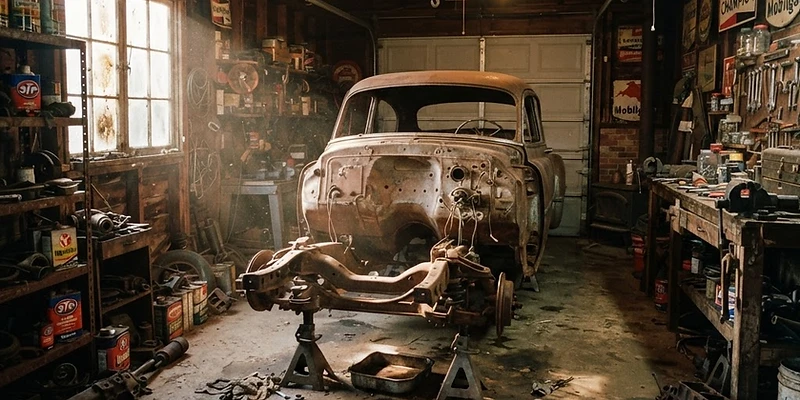
In the amber light of a mid-afternoon sun filtering through a grime-caked garage window, the air is thick with the sharp, metallic tang of lead dust and the heavy, sweet scent of nitrocellulose lacquer. Before the advent of computerized mixing banks and downdraft booths, the restoration of an automobile was a ritual of tactile endurance. It began in the backyard, where the shop was a sanctuary of creaking rafters and oil-stained concrete floors. Here, the restoration of a 1950s fender was not an exercise in digital precision, but a dialogue between the hands and the malleable temper of cold-rolled steel.
The Craft of the Metal Shaper
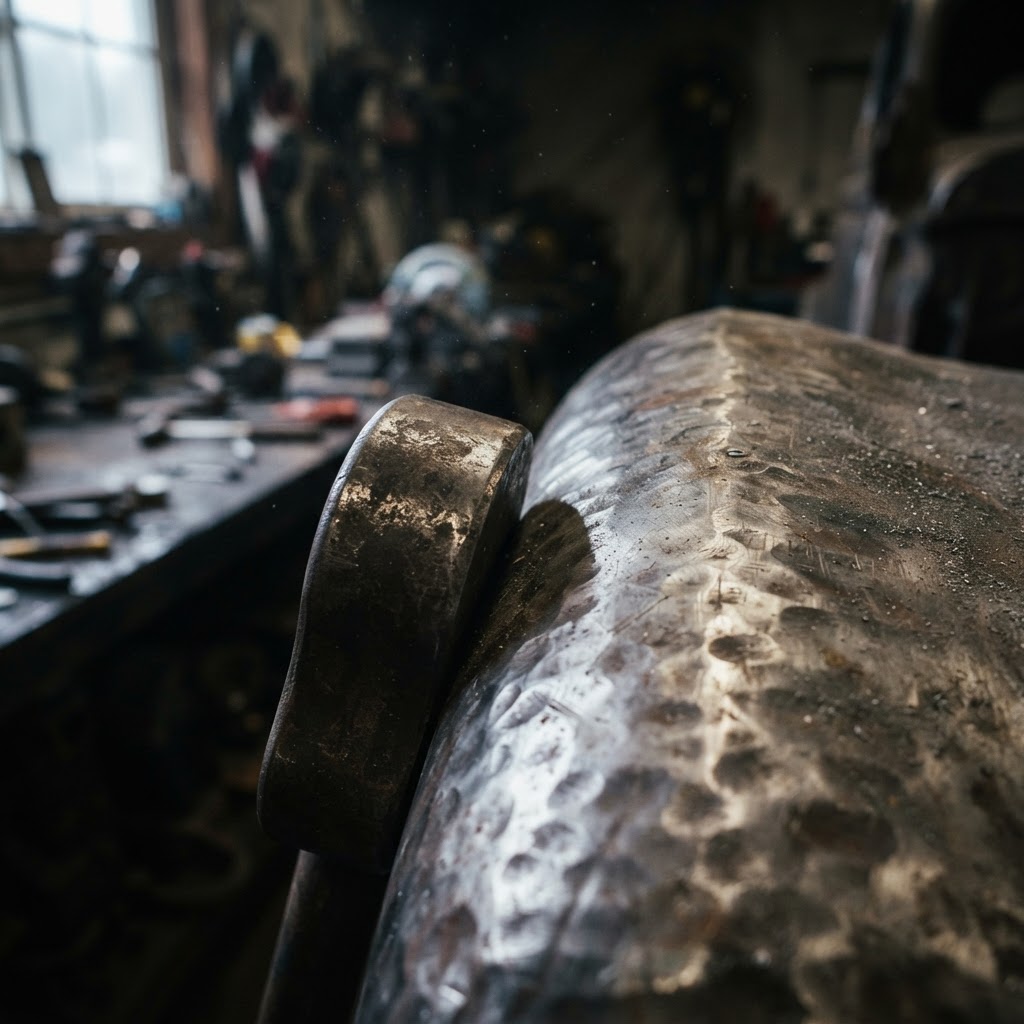
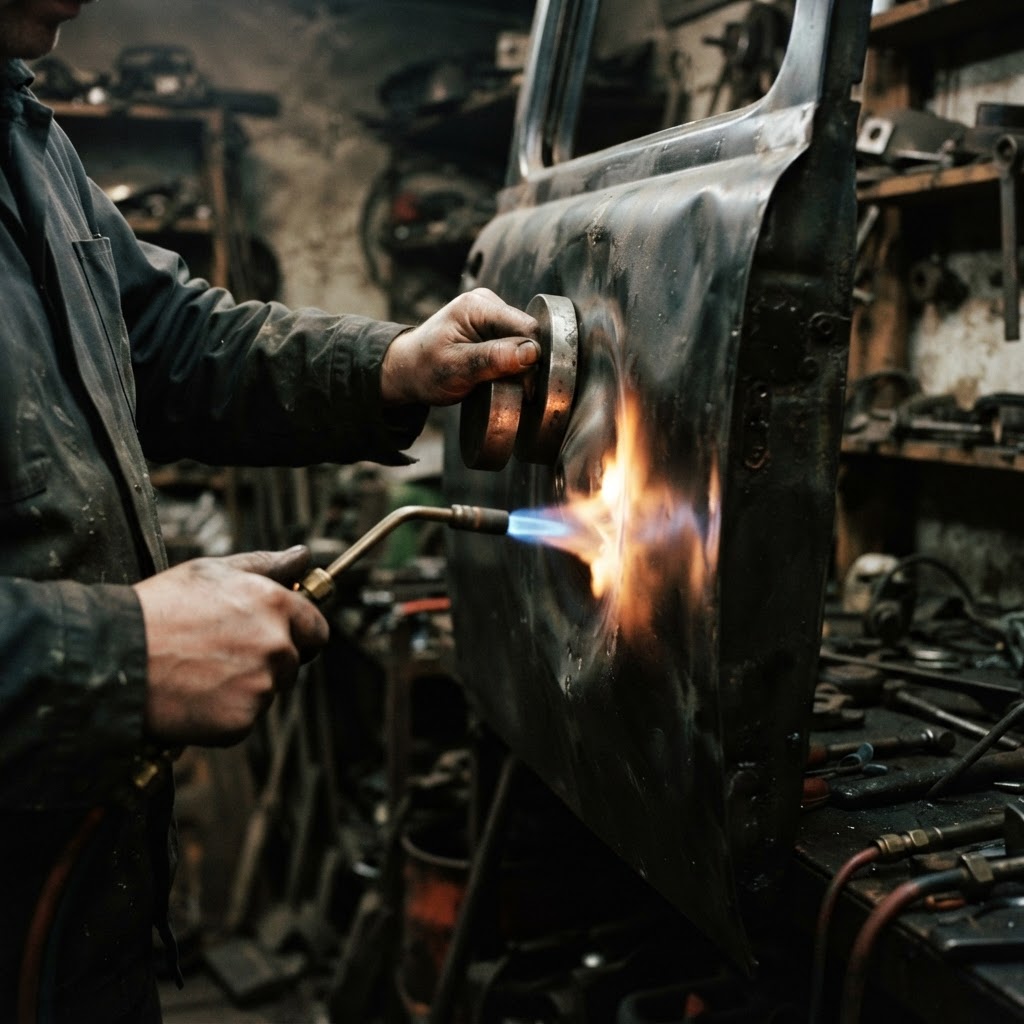
Restoration in the mid-20th century relied heavily on the mastery of metal fatigue and thermal expansion. When a panel was buckled, it was not replaced with a modern stamped reproduction. Instead, it was worked over with a body hammer and a specialized steel dolly. This process required a profound understanding of how metal moves. By using a dolly to support the rear of a dent, the restorer could stretch the metal into place, correcting the memory of the steel. When the metal became work-hardened, a torch was used to localize heat, inducing a controlled contraction as the steel cooled. This thermal manipulation was a precise science, refined through decades of experience in small-scale shops.
The Chemistry of the Finish
The transition from bare metal to a glossy finish was arguably the most hazardous phase of early restoration. Before modern waterborne paints, restorers utilized high-solvent nitrocellulose or acrylic lacquer. These materials dried by solvent evaporation rather than chemical curing, meaning they could be applied in thin, translucent layers. This process demanded patience and a heavy hand with the block sander.
The Traditional Refinishing Workflow
- Hand-sanding the substrate to create a mechanical bond for the primer.
- Applying several coats of high-build primer, often containing lead-based additives for rust inhibition.
- Wet-sanding the primer with fine-grit abrasive paper to achieve a perfectly flat surface.
- Applying successive coats of lacquer, often dozens, to build depth.
- Rubbing out the final clear coat with progressively finer compounds to achieve a mirror-like luster.
The Evolution of Abrasives and Adhesives
Restorers of the 1960s and 1970s lacked the dual-action orbital sanders that define modern bodywork. Instead, they relied on long, wooden sanding boards that required a rhythmic, sweeping motion. This manual technique forced the technician to feel the contour of the body, identifying high and low spots through vibration and resistance. The adhesives were equally archaic; early body fillers were often lead-based, known as body solder. Applied molten and shaped with a wooden paddle coated in tallow, lead solder offered a seamless integration with the steel that synthetic plastic fillers struggled to replicate for decades.
The Legacy of the Backyard Era
Modern restoration has largely moved away from the toxic fumes and manual labor of the backyard barn era. Yet, the principles remain inextricably linked to those foundational years. Today, we utilize high-tech laser scanning and computer-aided design, but the final test of a body line—the glide of the palm across a curve—remains exactly as it was in 1985. The historical shift from barn-based craftsmanship to clinical, booth-contained precision has undeniably improved consistency and safety, but it has not replaced the need for the restorer's intuition. By understanding the chemical limitations and physical techniques of our predecessors, the modern technician learns to respect the inherent limitations of the material, ensuring that the legacy of the craft survives in every pass of the sander.