Bondo and the Postwar Boom: How Plastic Changed Bodywork
The Scent of Catalyst
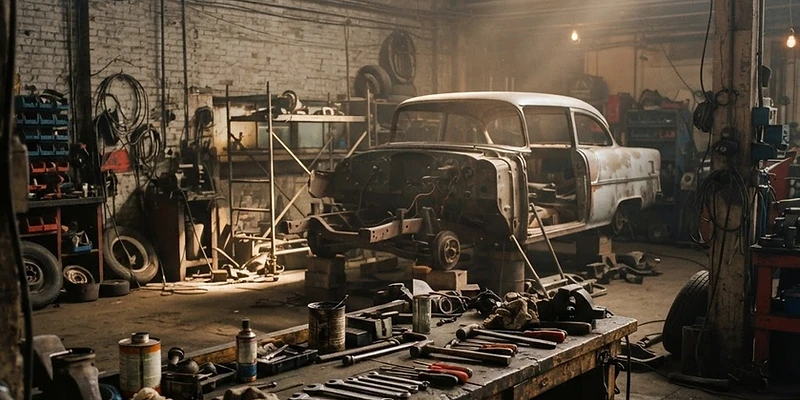
The shop is quiet save for the rhythmic, raspy shucking of a sanding board against a fender. In the dim afternoon light filtering through the grime of the clerestory windows, a fine, ghostly veil of white dust settles over everything. It is a sharp, chemical scent—a mixture of polyester resin, styrene monomer, and the raw, cold bite of bare steel. This is the olfactory signature of the modern auto body shop, a stark departure from the heavy, metallic tang of the acetylene torch and the lead pot that defined the industry in the first half of the twentieth century.
The Age of Lead Wiping
Before the mid-1950s, repairing a dented panel was a feat of metallurgy. A body man was, in effect, a tinsmith. After roughing out a dent with a dolly and hammer, the remaining imperfections were filled using body solder—a lead-tin alloy. The process was grueling and perilous. Technicians would heat the panel to a precise temperature, applying the solder with a wooden paddle coated in tallow to prevent sticking. The lead was then pushed and molded into the steel, essentially bonding metal to metal at a molecular level through thermal expansion.
It required a master’s touch to ensure the lead didn't slump under its own weight. Once cooled, it was filed down by hand with flexible, razor-sharp body files. The labor was immense, the health risks from lead vapor were poorly understood, and the process was agonizingly slow, fitting for a time when vehicles were constructed with much heavier gauge steel.
The Plastic Revolution
The post-war economic boom demanded speed. As the automotive industry pivoted toward annual model changes, body shops could no longer afford the days required to lead-wipe a single quarter panel. By the late 1950s and early 1960s, polyester-based fillers entered the mainstream market. Originally marketed for industrial repairs, the product commonly known by the brand name Bondo changed everything.
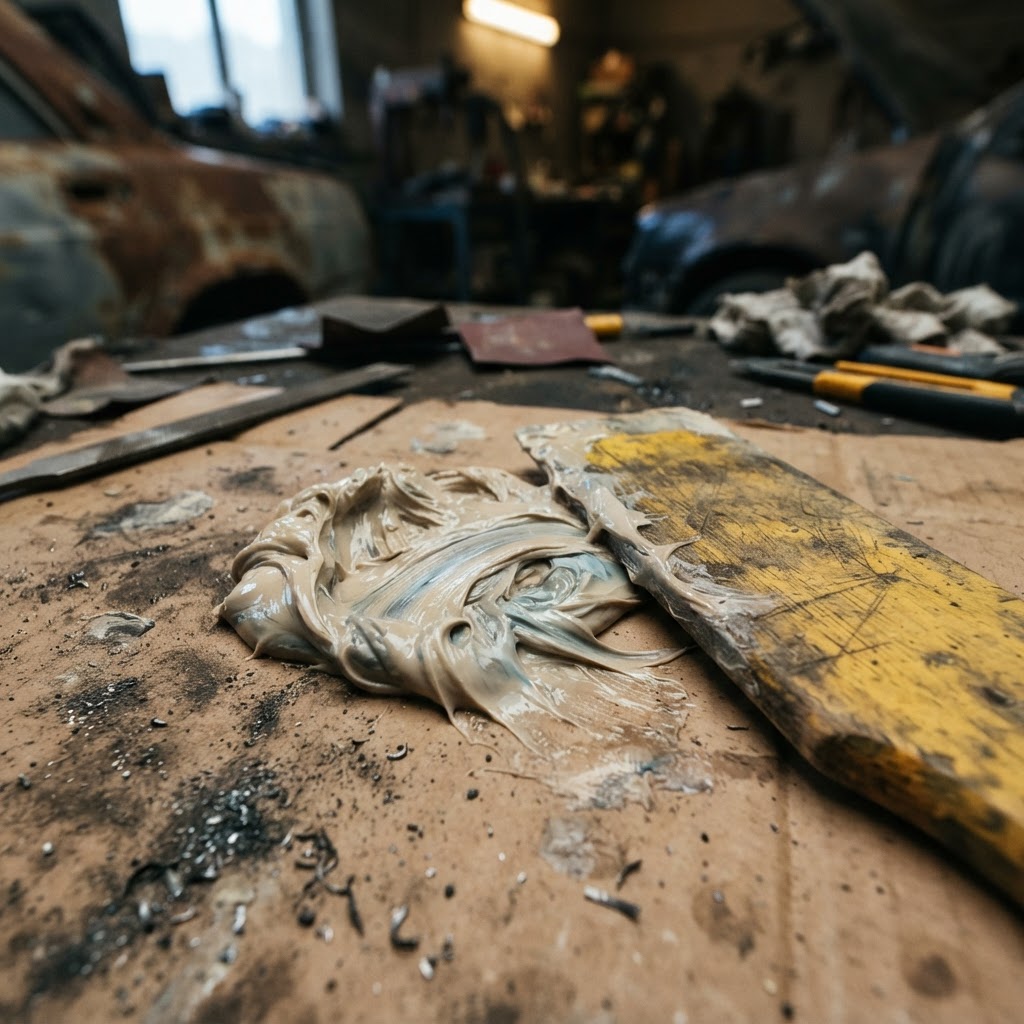
The chemistry was elegant in its simplicity. A polyester resin is mixed with a peroxide hardener, triggering an exothermic polymerization reaction. Unlike lead, which required open flame and high heat, this plastic compound could be applied cold. It bridged the gap between raw metal and smooth aesthetics with unprecedented ease. The application process became the new standard for efficiency:
- Grinding the damaged area to bare metal to ensure mechanical adhesion.
- Mixing the polyester resin with the cream hardener until the color is uniform.
- Spreading the mixture across the depression, overfilling slightly to account for sanding.
- Allowing the resin to cure, during which the chemical reaction creates a rigid, thermoset structure.
- Sanding the filler to the precise contour of the surrounding body lines.
Engineering the Surface
Technically, body filler acts as a structural bridge. Because polyester resin does not possess the ductility of steel, it is susceptible to cracking if applied too thickly over high-vibration areas. The master technicians of the 1970s and 80s learned to balance the use of the hammer and dolly—the art of metal finishing—with the application of filler. The goal was always to minimize the filler thickness to a mere skim coat. If the metal work was done correctly, the filler served only to perfect the surface tension and aesthetic lines, not to reconstruct the structural integrity of the vehicle.
The Legacy of the Filler Era
The shift to plastic fillers democratized automotive restoration. It allowed shops to increase their throughput and made custom modifications, like shaving door handles or filling trim holes, accessible to enthusiasts working in residential garages. While modern materials have evolved—incorporating micro-spheres to reduce weight and resins that offer better moisture resistance—the fundamental chemistry remains consistent with those early post-war experiments.
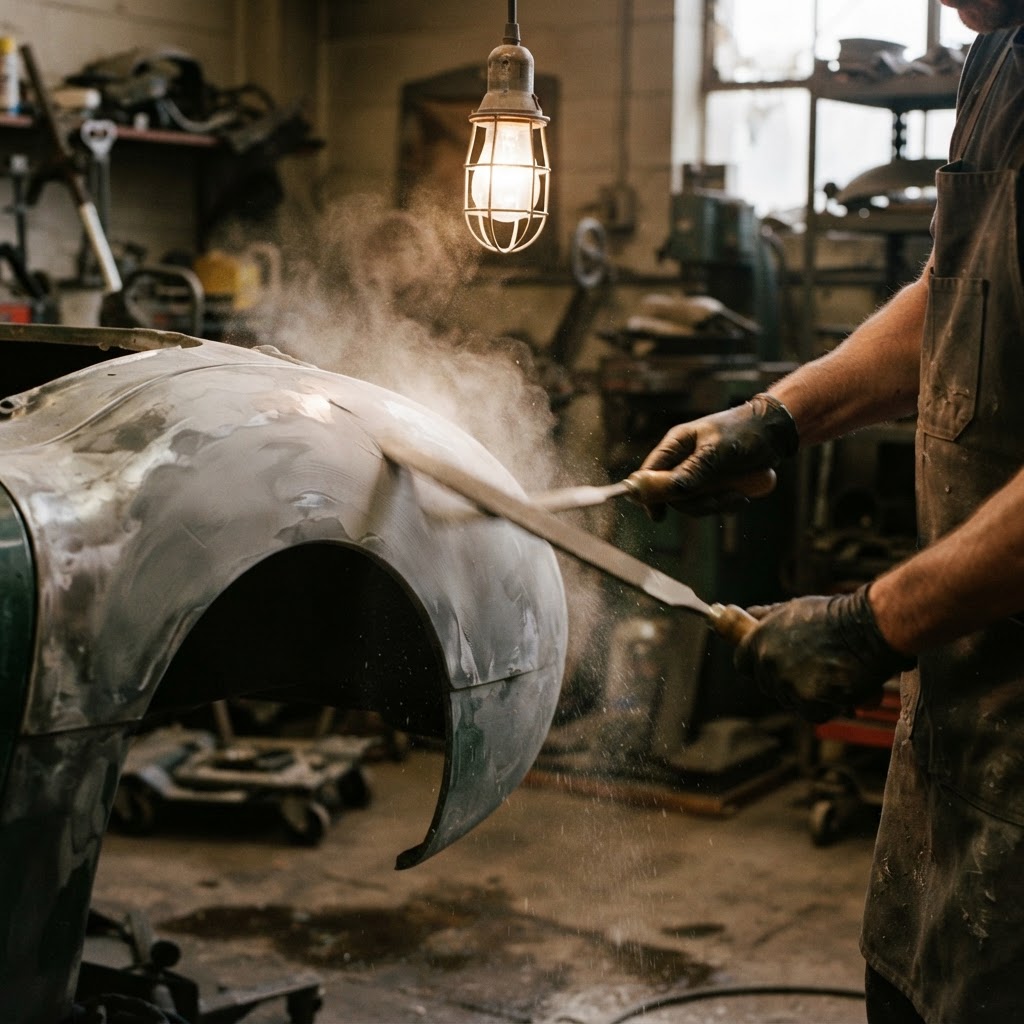
Today, while high-end restorations still prize the purity of metal finishing, the practical reality of daily shop work relies on the legacy of the plastic boom. We honor the old craft by understanding its limitations. We use the hammer to move the metal as close to perfection as the laws of physics allow, and we use the chemistry of the modern age to bring that final, invisible perfection to the surface. The rasp of the sanding board continues, a constant reminder that whether through lead or resin, the pursuit of the perfect line remains the core mission of the trade.