Bondo and the Postwar Boom: How Plastic Changed Bodywork
The Scent of Catalyzed Resin
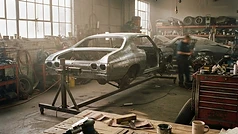
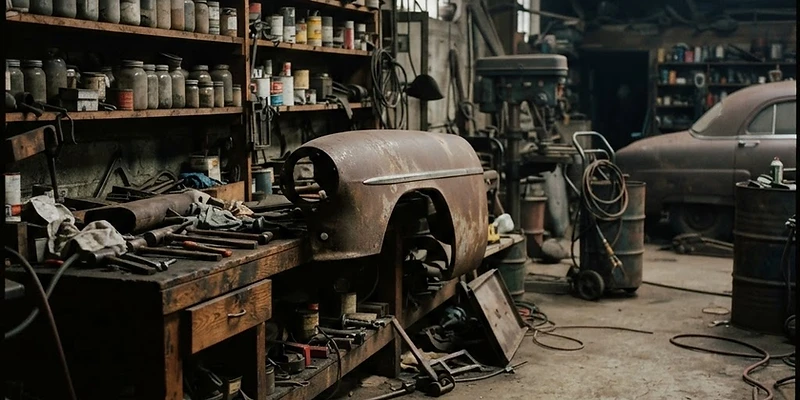
The air in a shop that has seen five decades of work carries a specific, sharp chemical signature. It is a ghost of a thousand afternoons spent sanding—a fine, chalky dust that hangs in the stagnant light, settling on the rafters like snow. Before the revolution of the 1950s, the repair of a steel panel was a dance of fire and lead. Today, that legacy is buried beneath layers of polyester resin, the material that fundamentally altered the trajectory of auto body repair.
The Age of Lead Wiping
In the pre-war era and deep into the 1940s, body repair was the domain of the metal shaper and the lead burner. When a fender was dented, the goal was to return the sheet metal to its original contour using dollies and hammers. The final imperfections were corrected using a lead-tin alloy, commonly referred to as body solder. This process required a torch, a wooden paddle, and the steady hand of a master who knew exactly when the solder reached its plastic state—just before it liquefied—allowing it to be pushed into the low spots and smoothed with tallow.
The Technical Drawbacks of Lead
- High heat requirements which often warped the surrounding thin-gauge steel.
- The extreme toxicity of lead fumes and sanding dust.
- The requirement for acid-based fluxes that could cause long-term corrosion if not perfectly neutralized.
- The extreme physical skill set required to master vertical lead wiping.
The Arrival of Polyester Resin
The transition began in the 1950s as the automotive industry shifted toward mass production and high-volume repair demands. Polyester resin, a byproduct of wartime plastic development, entered the workshop. When mixed with a peroxide hardener, this two-part compound cured into a hard, sandable, and durable filler. It required no torch, no flux, and minimal heat, making it accessible to a new generation of mechanics who were not trained in the arduous, near-mythical art of lead wiping.
The Chemistry of the Fill
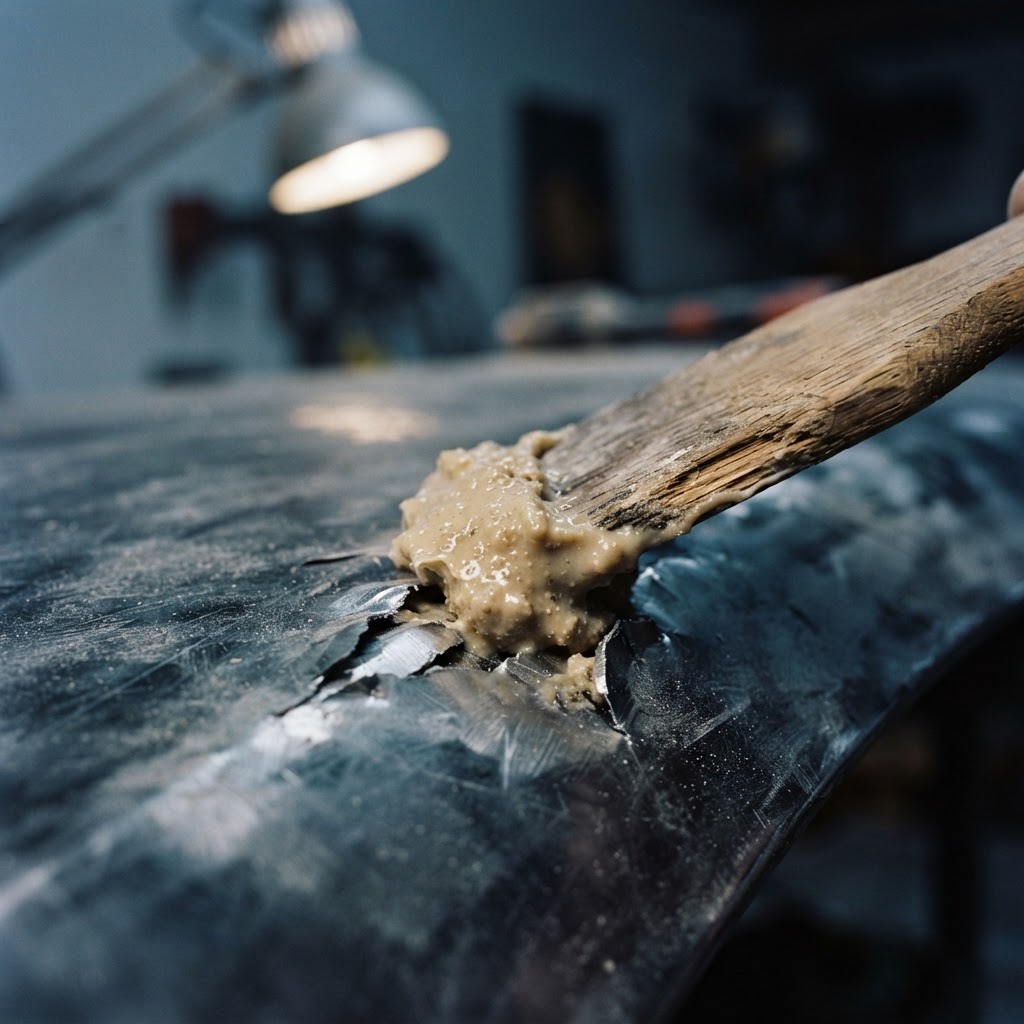
Unlike lead, which is a metal-to-metal bond, polyester filler relies on mechanical adhesion. When the body man scuffs the panel with 36 or 80-grit sandpaper, he creates a mountain range of tiny peaks and valleys. The resin flows into these pores, locking into place as it exothermic reaction takes hold. It is a triumph of chemistry over metallurgy, allowing for the filling of voids without the dangerous thermal expansion associated with open-flame repair.
Refining the Technique
The evolution of the filler process was rapid. Shops learned that while plastic was easier to work with, it was not a structural replacement for steel. The modern workflow, perfected by the 1970s, generally followed these steps:
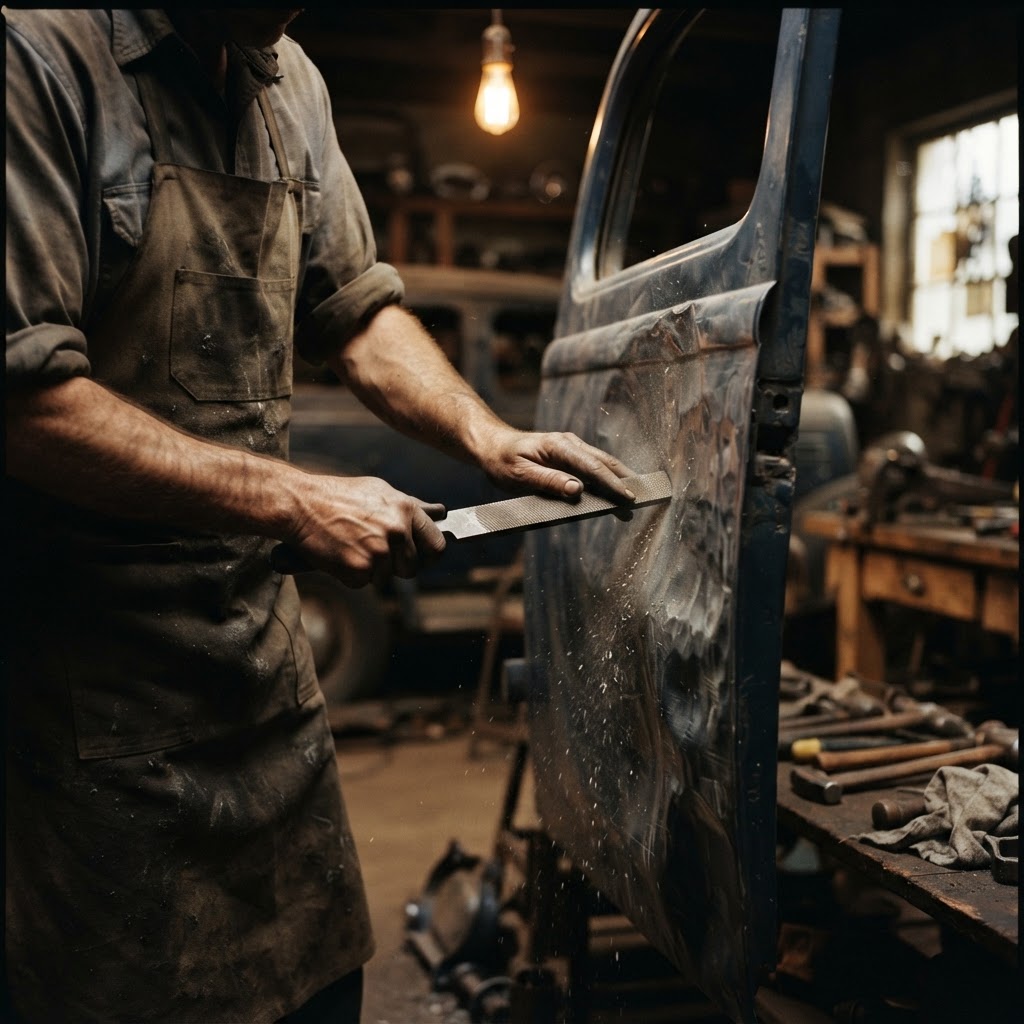
- Roughing out: Using body hammers to bring the panel to within a sixteenth of an inch of the original profile.
- Surface Prep: Grinding the metal clean and creating a coarse tooth for the filler to grab.
- Application: Spreading the catalyzed resin in thin, pressure-applied layers to minimize air entrapment.
- Blocking: Using long sanding boards to ensure the filler surface matches the surrounding body lines.
The Legacy in Modern Practice
Today, the art of the old-school metal man is not dead, but it has been synthesized with modern chemistry. We understand now that filler is a skin, not a skeleton. High-quality restorations still prioritize metal work above all else, using plastic only to achieve the final, mirror-perfect finish that today's high-solids clear coats demand. While the shop no longer rings with the sound of the lead paddle hitting the wood, the spirit of that craft—the relentless pursuit of the perfect curve—remains the baseline for everything we do. The plastic changed the speed of the work, but the eye of the craftsman remains the only true judge of a finished panel.