The Frame Machine: Straightening Steel in the Unibody Era
The Anatomy of an Impact
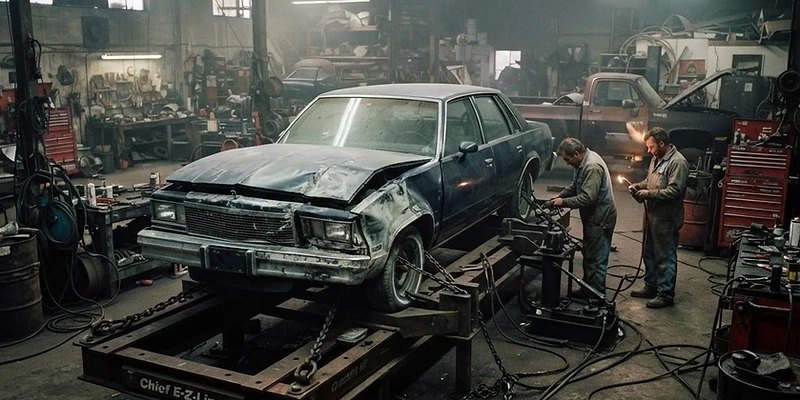
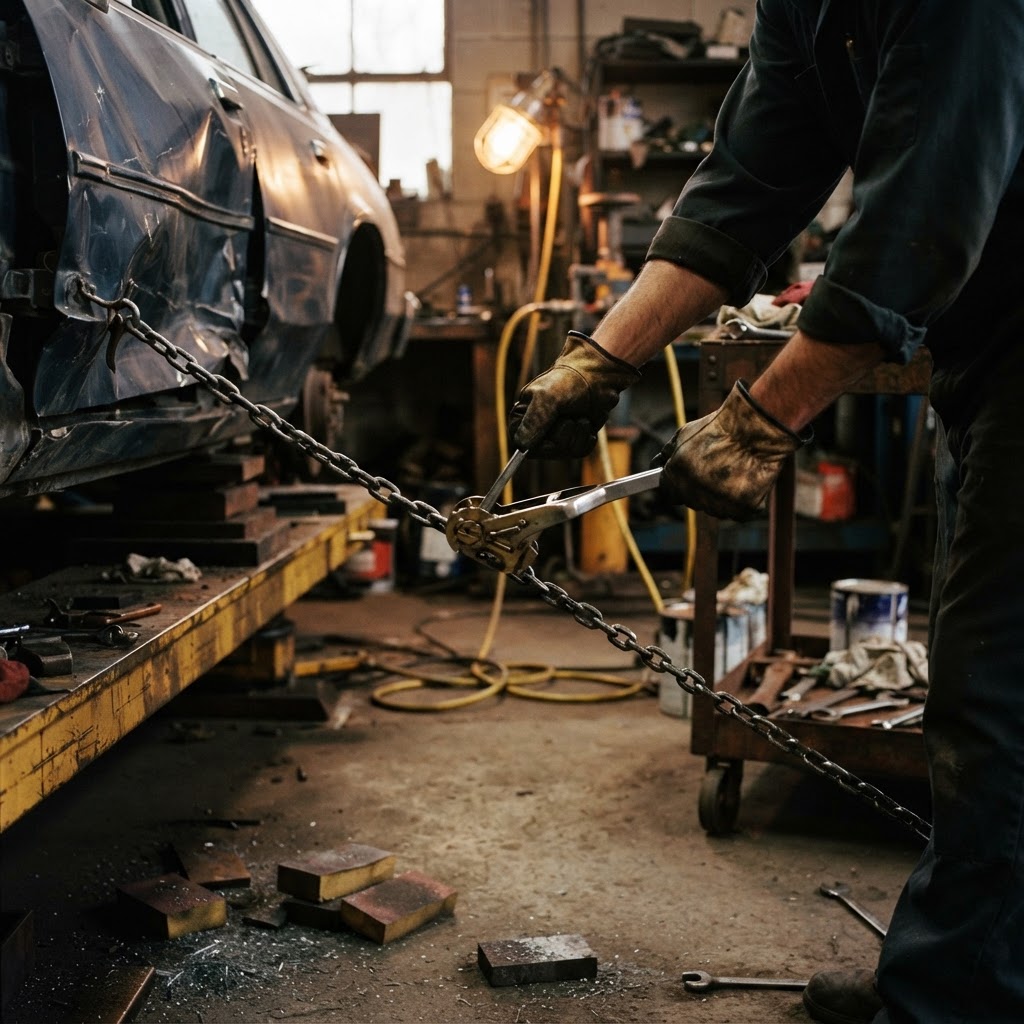
The air inside a shop in the mid-1980s carried a specific, heavy cocktail of odors: the sharp, metallic tang of ionized ozone from a MIG welder, the sweet, sickly perfume of catalyzed lacquer primer, and the lingering scent of stale coffee. Under the harsh hum of flickering fluorescent lights, a twisted hulk of a sedan sat chained to the floor. The sound was not of gentle repair, but of immense, calculated violence. It was the low-frequency groan of a hydraulic ram pushing against a longitudinal rail, fighting the memory of a chassis that had folded like paper under the kinetic force of a collision.
The Transition from Full Frame to Unibody
For the first half of the twentieth century, the body-on-frame design was the industry standard. These vehicles were essentially built upon a heavy, ladder-like steel foundation. When these cars were involved in a wreck, the frame could be leveled using simple mechanical jacks and chains attached to heavy floor anchors. The frame was a separate entity from the body panels, meaning structural integrity and cosmetic appeal were two largely separate concerns. By the late 1970s and early 1980s, the rise of the unibody—or unitized construction—fundamentally changed the physics of repair. In a unibody vehicle, the skin and the structure were one and the same. There was no separate frame to straighten; the entire chassis acted as a complex, interlocking web of load-bearing steel.
The Emergence of the Bench System
As unibody construction became the standard, the old floor-anchor methods proved woefully inadequate. Technicians required a system that could hold the vehicle in three-dimensional space with mathematical precision. Enter the frame bench. These massive steel platforms became the centerpiece of the modern shop floor. Using a series of interchangeable clamps and jigging towers, the machine allowed a technician to lock the vehicle into place based on factory-specified datum points.
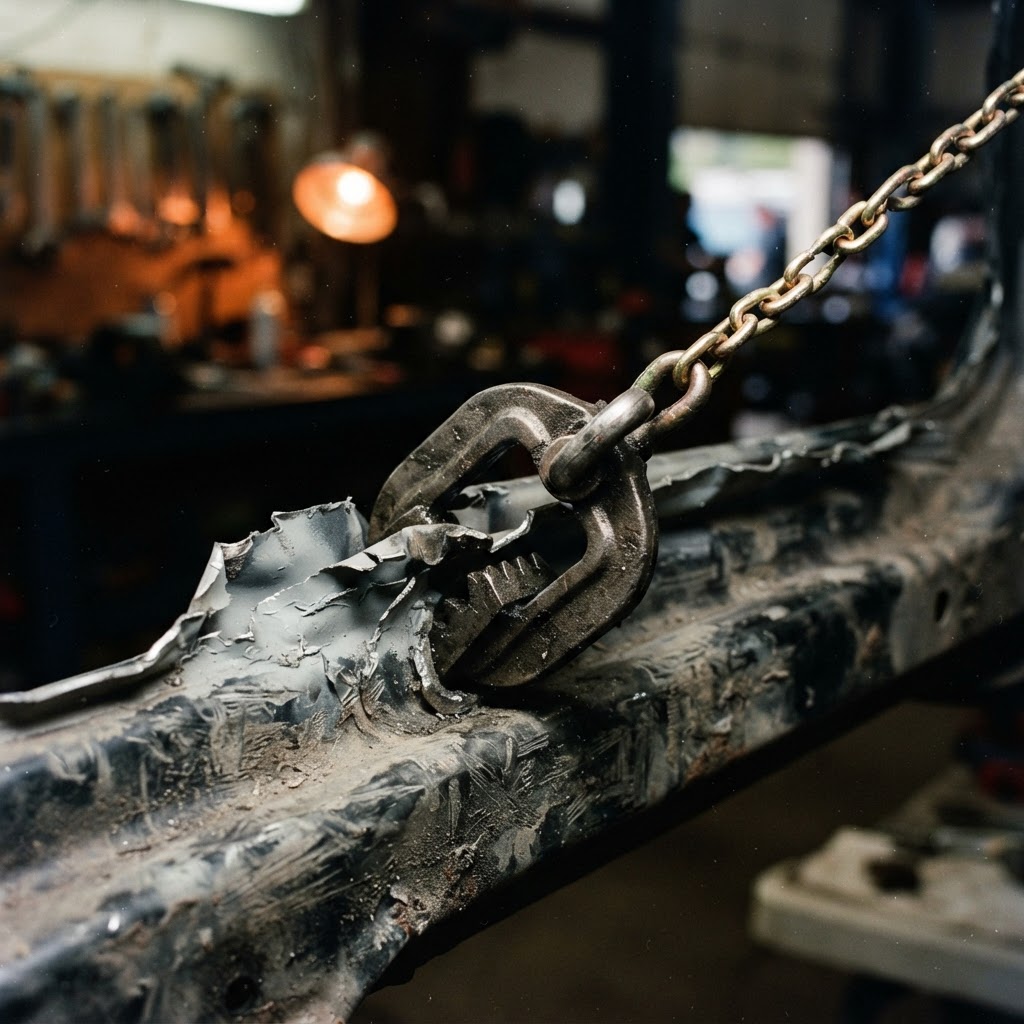
The engineering challenge was to undo the accordion effect created by a front-end collision. Steel, when deformed, undergoes work hardening, meaning the metal actually becomes stronger and more brittle in the bent area. To bring a vehicle back to factory specifications, a technician had to move the metal in the exact reverse of the original impact. This process typically followed a rigorous sequence:
- Diagnostic Analysis: Measuring critical points against a computerized tram gauge or laser system to establish the exact deviation.
- Anchoring: Securing the rocker panels or pinch welds to the bench fixtures, effectively turning the bench into a new, artificial foundation for the car.
- Vector Pulling: Attaching hydraulic rams to pull the damaged structural members back along the path of the original impact vector.
- Stress Relief: Applying measured heat to specific points—a controversial practice among structural engineers—to allow the steel to regain its form without fracturing.
Chemistry and Metallurgy
The mastery of the frame machine required an intimate knowledge of metallurgy. Early unibody designs utilized high-strength, low-alloy (HSLA) steel, which reacted differently to heat than the mild steel of previous generations. Excessive heat would destroy the temper of these specialized alloys, rendering a structural component weaker than it was before the repair. This shifted the industry toward cold-pulling techniques, where the metal was coerced into alignment through sheer force rather than heat. This demanded more sophisticated hydraulic gear and, crucially, a deeper understanding of the metal's elastic and plastic limits.
The Legacy of Precision
Today, the art of structural repair has moved into the realm of digital validation. Modern systems utilize sonar and laser sensors that provide real-time updates as the hydraulic rams pull, ensuring that even a fraction of a millimeter of deviation is caught. While the heavy, grease-stained chain pullers of the 1980s have largely been replaced by silent, high-tech electronic benches, the core principle remains unchanged. The goal is to return a vehicle to its original geometry, essentially tricking the steel into forgetting the trauma of the impact and returning to the precise form intended by the engineers. The frame machine is more than just a tool; it is the bridge between the chaotic energy of an accident and the rigid, reliable safety of the road.