The Dent Puller: How One Tool Rewrote Collision Repair
The Anatomy of a Scar
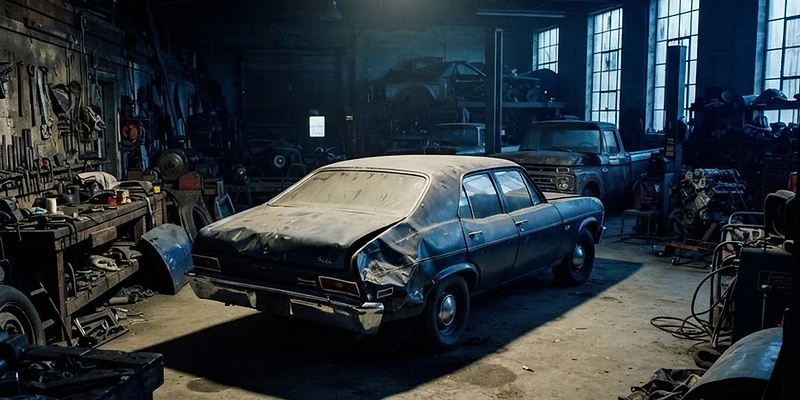
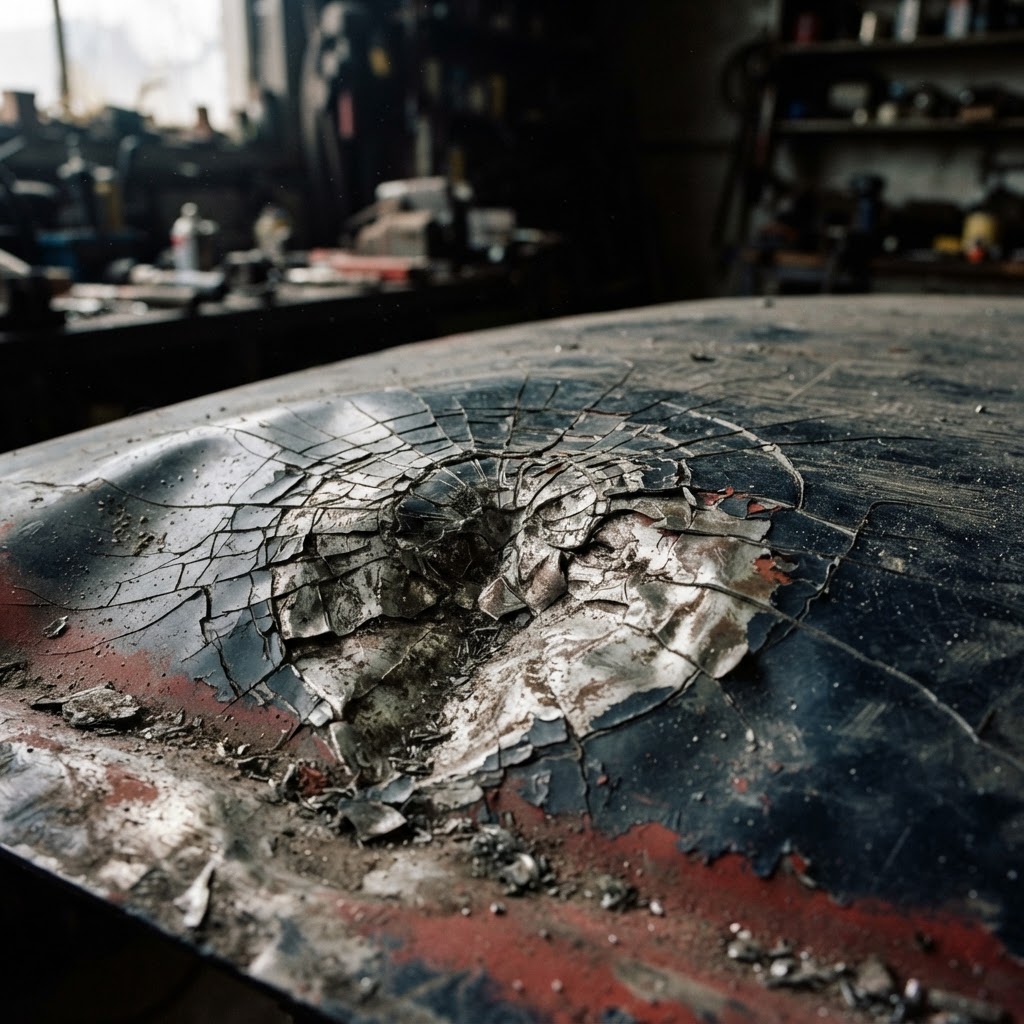
The shop air at four in the morning carries a specific alchemy: the metallic tang of cooling steel, the faint, sweet ghost of solvent-borne primer, and the pervasive, fine grit of dust that settles on every horizontal surface like snow. In the corner, beneath a single halogen bulb, sits a quarter panel from a mid-1970s sedan. It bears a deep, concave crater—a brutalized piece of geometry that, fifty years ago, would have signaled the death of the panel. Before the advent of modern pulling techniques, fixing this would have required stripping the interior upholstery, removing trim, and attacking the metal from the backside with a hammer and dolly, often destroying the structural integrity of the inner bracing in the process.
The Evolution of Surface Tension
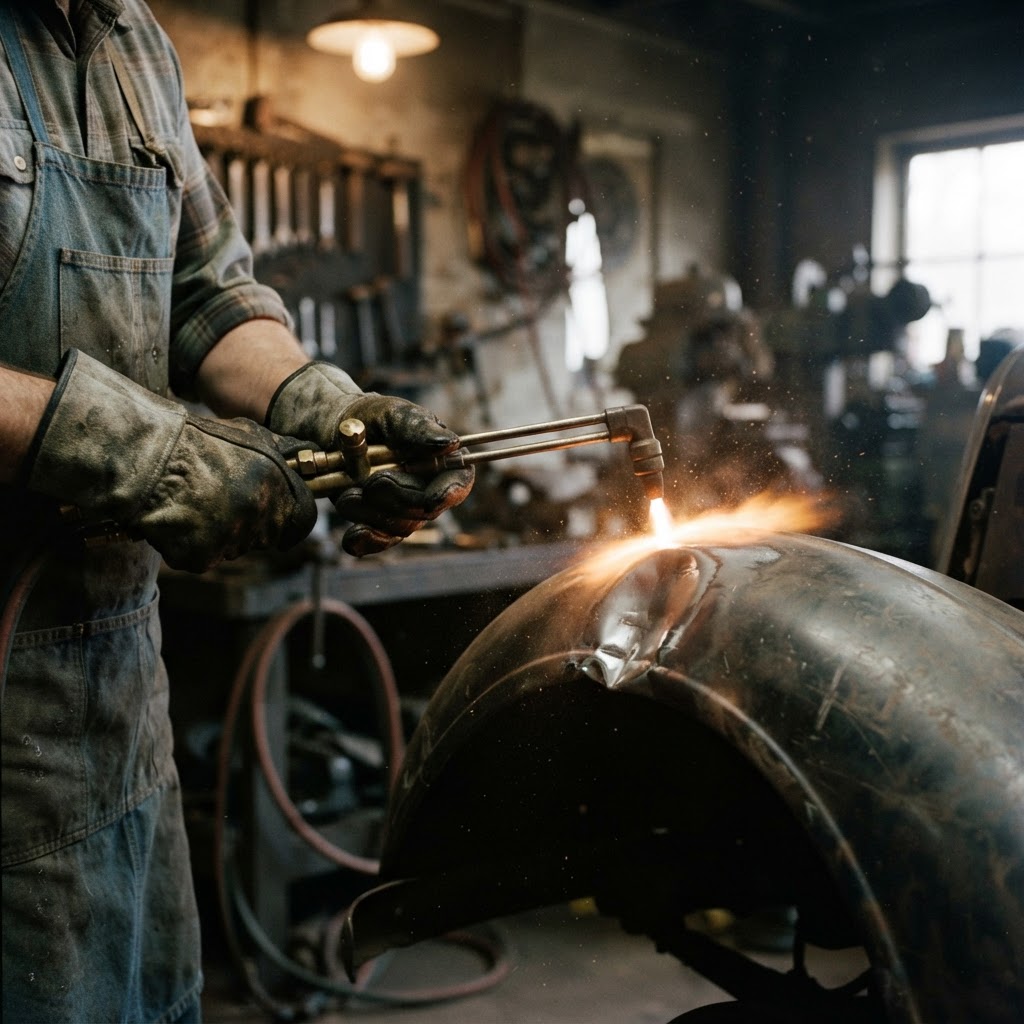
For the first half of the 20th century, metal repair was an exercise in destructive access. The goal was always to return the steel to its original state through force. When a collision occurs, the steel undergoes a phenomenon known as plastic deformation. The molecular lattice is strained and elongated beyond its elastic limit, creating a tension that traps the metal in its new, crumpled state. Early craftsmen relied on the 'shrinking' and 'stretching' of the metal, using heat from an oxy-acetylene torch and rhythmic strikes from a bumping hammer to encourage the steel to relax back into its original plane.
The process was arduous. If you could not reach the backside, you had to drill holes to insert hooks or, more radically, cut the metal out entirely to replace it with a patch panel. Every intervention compromised the rust-proofing of the factory. Every weld introduced a heat-affected zone, turning high-strength sheet metal into brittle, oxidized carbon.
The Rise of the Stud Welder
The paradigm shifted significantly in the 1970s and 1980s with the refinement of the stud welder, a tool that changed the physics of repair. Instead of fighting the metal from behind, the welder allowed the technician to bond a metallic stud to the high point of the depression. A slide hammer could then be attached to the stud, allowing for a precise, axial pull that respected the tension of the surrounding steel.
The Mechanics of the Pull
- The technician grinds the paint away to expose bare, conductive steel.
- A copper-coated steel stud is inserted into the welding gun.
- A brief, high-amperage, low-voltage discharge creates a localized arc, fusing the stud to the panel in milliseconds.
- The slide hammer is engaged, exerting outward force until the crown of the dent rises to match the original body line.
- The stud is snapped off with a twisting motion, leaving only a pinhead-sized mark to be filled.
This method was revolutionary because it minimized the amount of surface area disrupted. By focusing the pull exactly where the tension is highest, the technician avoids stretching the metal further. If the steel is pulled too hard or too quickly, it work-hardens, becoming brittle and prone to cracking under the force of the hammer.
Chemistry and the Death of Lead
Prior to the widespread adoption of efficient pulling, the final stage of bodywork was often handled by lead loading. A technician would heat the metal and apply a stick of lead-tin alloy, smoothing it over imperfections with a wooden paddle coated in tallow. It was a hazardous, skilled art form that required precise temperature control; too much heat, and the lead would melt into a puddle, running off the panel entirely.
As body filler technology evolved in the 1960s—transitioning from crude, chalk-based putties to catalyzed polyester resins—the need for lead diminished. These modern fillers are designed to bond to the micro-scratches left by a dual-action sander, bridging the gap left by the stud welder’s minor dimples. The chemistry of these resins is a balance of viscosity and shrinkage, allowing them to remain stable through the thermal expansion and contraction cycles of a vehicle in daily operation.
The Legacy of the Craft
The modern body shop is defined by these legacies. While we now employ aluminum-specific stud welders that use capacitive discharge to avoid piercing the thinner, softer alloys of contemporary vehicles, the core principle remains identical to those early innovators. We are essentially managing the energy stored in the atomic structure of the steel. Today, the craft survives in the tactile feedback of the technician. No computer can replicate the intuition required to know exactly how much force a panel can withstand before it collapses, and no machine can replace the patience required to work the metal back to its factory silhouette. We stand on the shoulders of the smiths who fought the metal with fire, and we carry their precision into the era of digital sensors and structural adhesives.