Dust to Downdraft: The Evolution of the Paint Booth
The Era of Open Air and Orange Peel
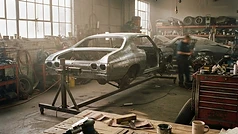
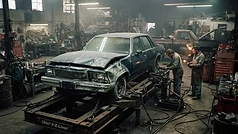
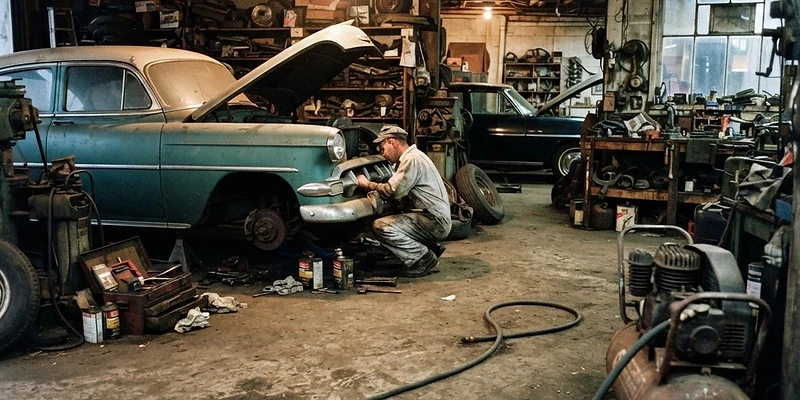
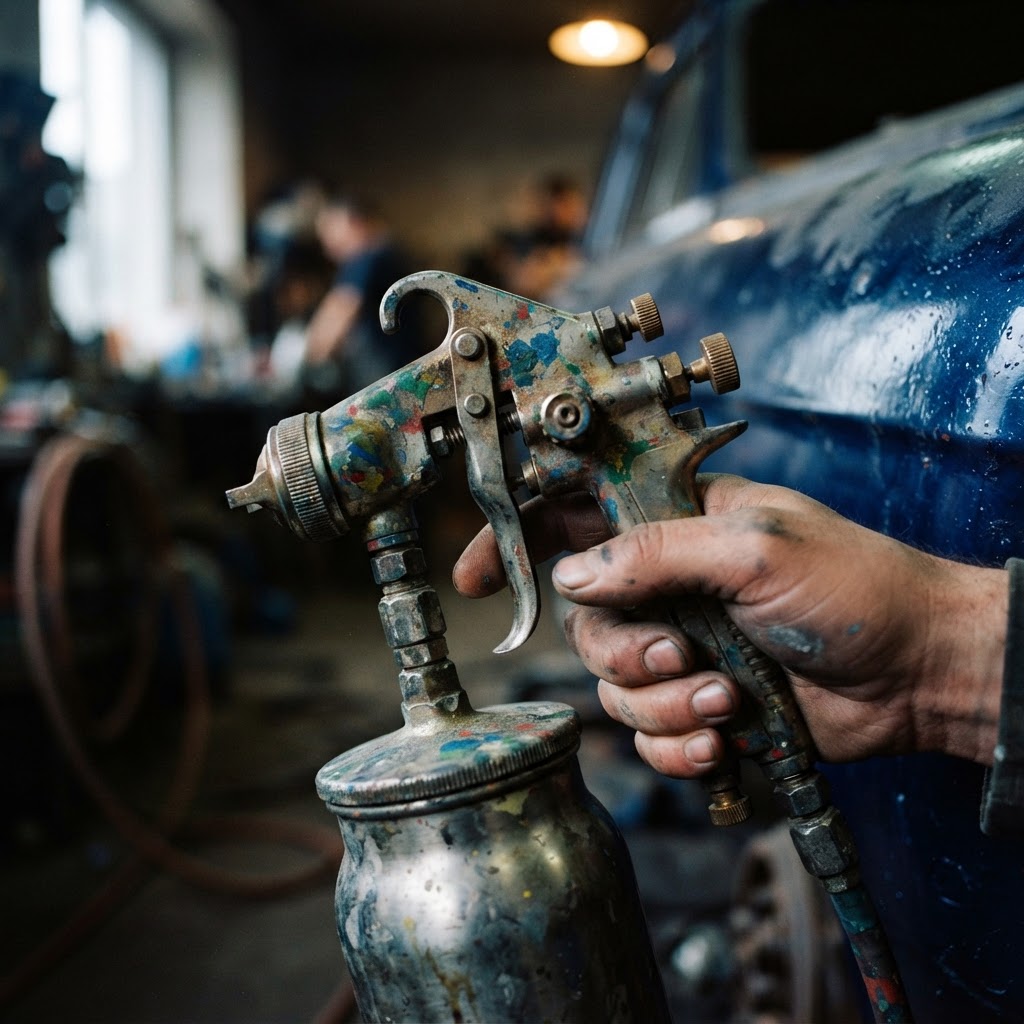
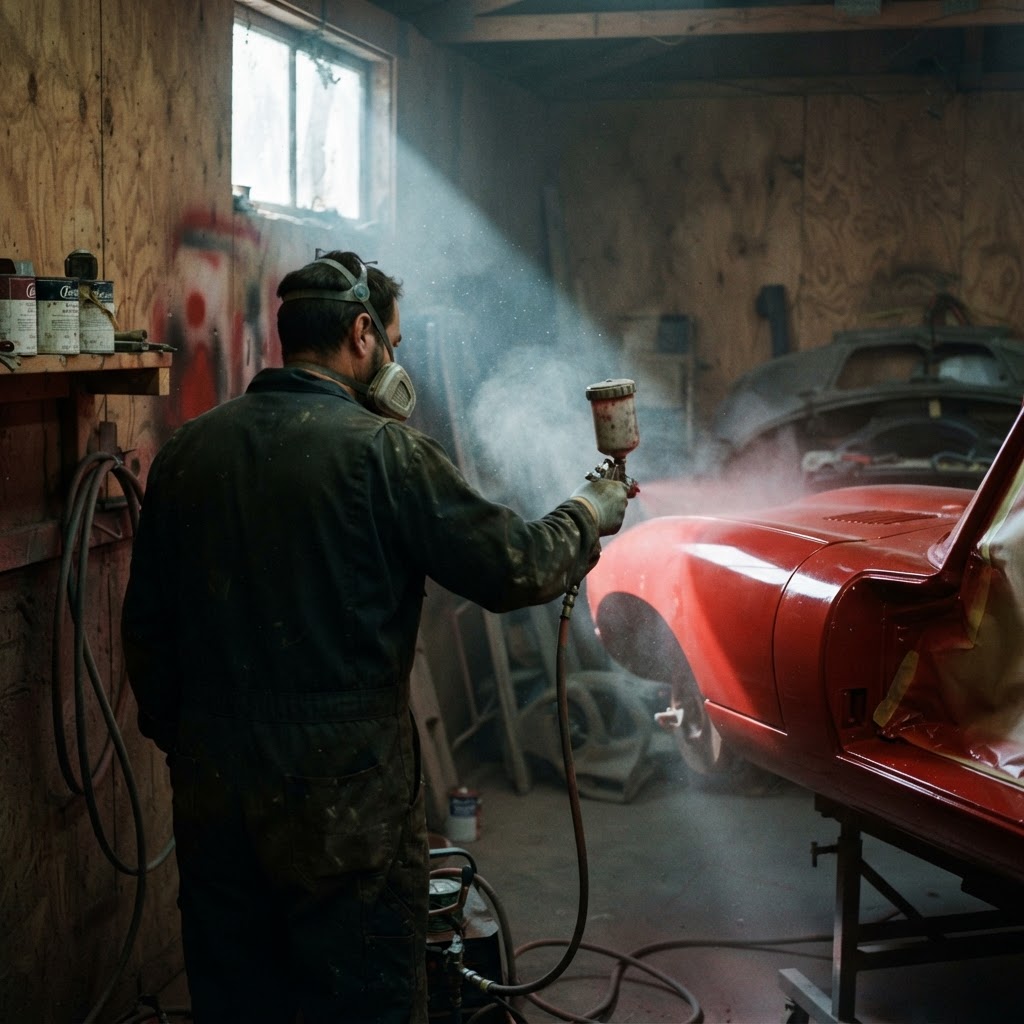
The smell hits you before the sight of the work does: a sharp, aggressive tang of xylene and lacquer thinner lingering in the pores of the concrete. In the early days of automotive bodywork, long before the clean rooms and the hum of industrial ventilation, painting a car was a primitive affair. A technician would haul a vehicle into a dark corner of the shop, mask off the glass with butcher paper and masking tape, and fire up a pressure-fed siphon gun. Dust motes danced in the light of incandescent bulbs, inevitably settling into the tacky, fast-drying nitrocellulose lacquer. It was an era of constant battle against gravity and ambient grit, where a "good" finish was measured by the amount of color sanding required to level the inevitable orange peel.
The Chemistry of Early Finishes
To understand the booth, one must understand the chemistry of the paint. Until the late 1950s, nitrocellulose lacquers were the industry standard. These paints dried through solvent evaporation rather than chemical curing. Because they dried so quickly, the atomization had to be perfect to prevent the paint from drying before it hit the surface. This necessitated high air pressures, which created a massive amount of overspray—a fine, suspended mist of solvent and pigment that coated everything in the shop. The health hazards were immense, but the equipment was simple: a portable compressor and a long length of rubber hose.
The Transition to Mechanical Control
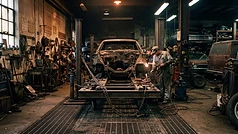
By the 1960s and 1970s, the industry began shifting toward acrylic enamels. These finishes were more durable and retained gloss better, but they required a more controlled environment to cure properly. The first paint booths were crude structures—often just a plywood box with a large exhaust fan pulling air through a bank of fiberglass filters. The goal was simple: pull the overspray away from the technician and exhaust it outside. However, these early designs suffered from "dead spots," where airflow failed to reach corners or the lower panels of the car, leading to inconsistent curing.
The Engineering of Airflow
The evolution from the basic exhaust fan to the modern downdraft booth represents a significant leap in fluid dynamics. Modern shops rely on three primary configurations to achieve the perfect finish:
- Crossdraft: Air enters through the front doors and is pulled horizontally across the vehicle to the rear exhaust plenum.
- Side-Downdraft: Air enters through the ceiling filters and is pulled down and out through the sides of the booth.
- Downdraft: The gold standard, where air is pushed through ceiling-mounted filters, flows vertically over the car, and is pulled through a floor-level grate system.
The engineering challenge lies in the velocity. If the air moves too fast, the paint does not settle; too slow, and the overspray hangs in the air, creating a fog that ruins the clear coat. Industry standards shifted toward maintaining a consistent air movement of approximately 100 feet per minute to ensure that particulates are pulled down and away from the wet paint surface.
The Modern Clean Room
The contemporary booth is a marvel of climate control. Today, the process of painting is highly regulated by temperature and humidity sensors that adjust the intake air. Before the paint gun is even triggered, the process follows a strict regimen:
- Decontamination: The vehicle is cleaned with anti-static agents to prevent dust attraction.
- Air Balancing: The booth cycle initiates to create positive pressure, preventing unfiltered shop air from entering.
- Bake Cycle: Post-application, the booth heats the air to between 140 and 160 degrees Fahrenheit to accelerate the polymerization of modern urethane clears.
From Craft to Science
While the modern booth provides a sterile environment, the core of the craft remains rooted in the old ways. The transition from the hazardous, dusty corners of mid-century workshops to the clinical, pressurized environments of today has fundamentally changed the technician's role. No longer just a painter, the technician is now a systems operator, managing sophisticated ventilation equipment alongside the delicate application of high-solid coatings. Yet, the old principles persist: the importance of panel preparation, the understanding of how light interacts with pigment, and the patient hand required to lay down a finish that lasts for decades. Technology has conquered the dust, but the soul of the work remains in the steady hand of the person behind the gun.