Lead, Solder, and the Lost Art of Hand-Formed Bodywork
The Weight of History in Molten Tin
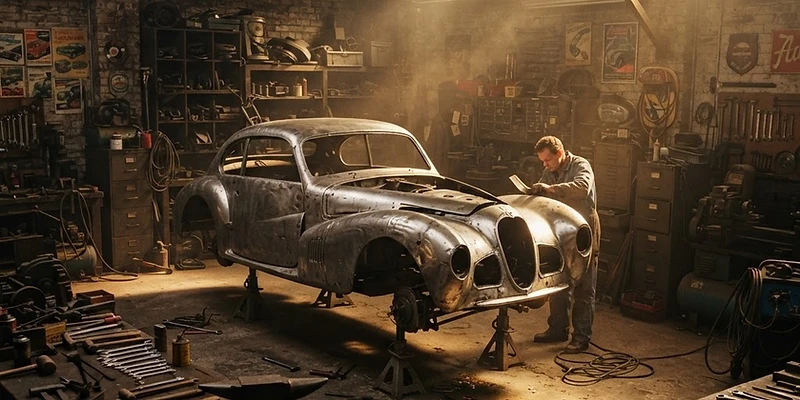
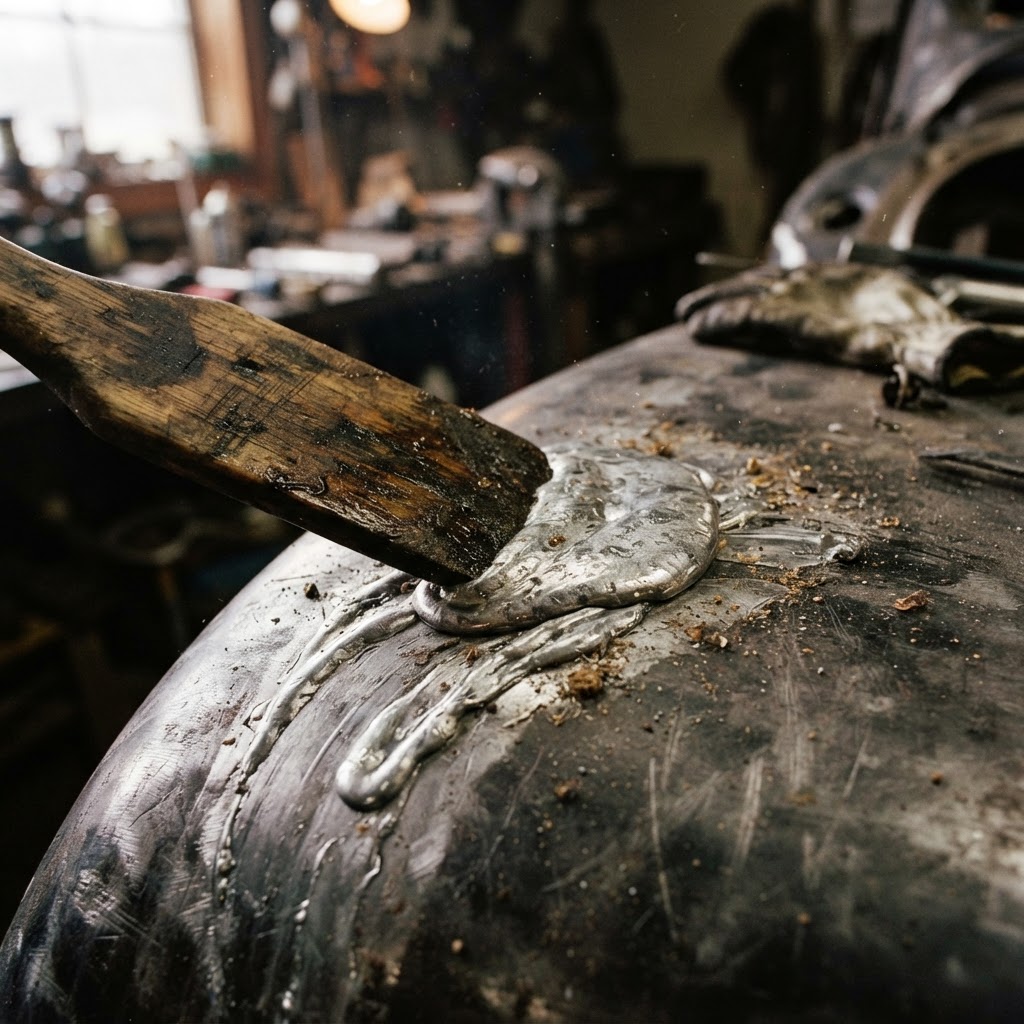
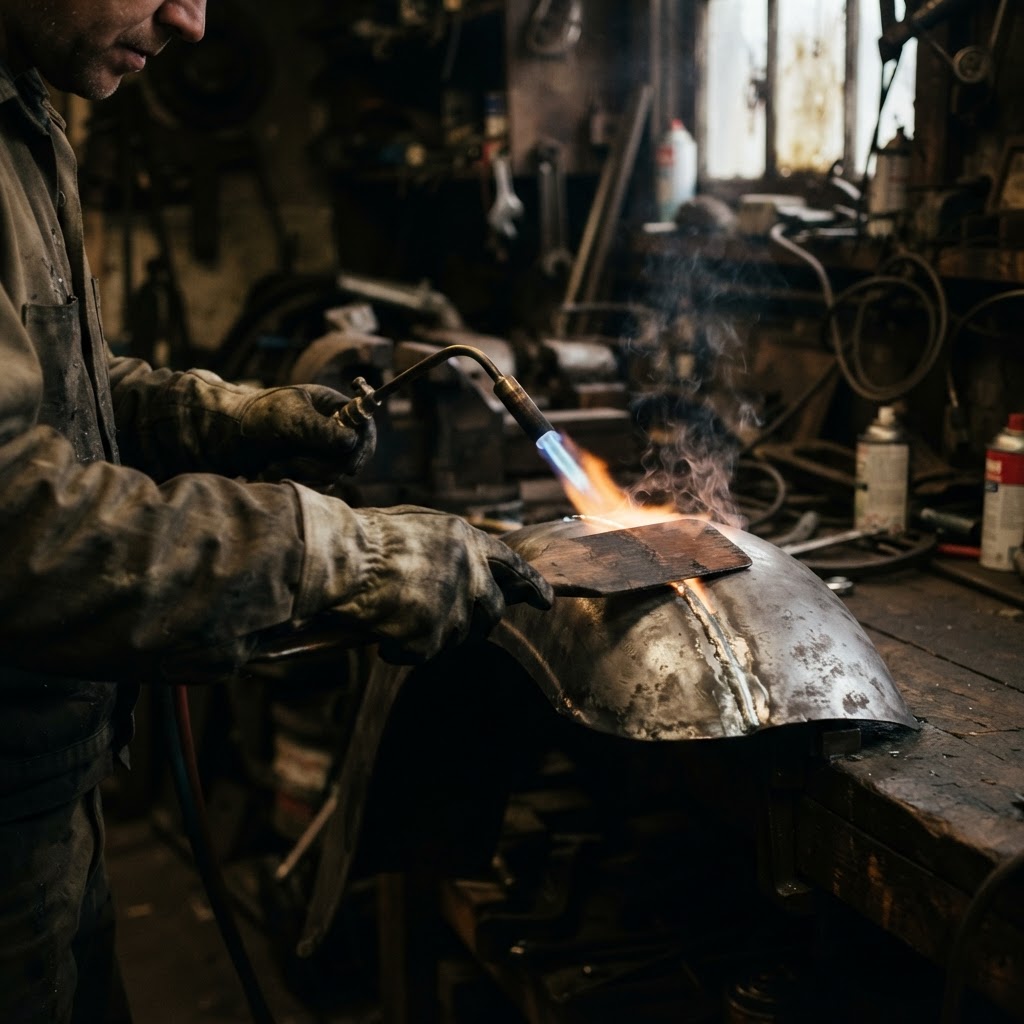
The smell hits you before the sight does—a sharp, metallic ozone tang mixed with the faint, waxy scent of tallow flux. In the low, amber light of a corner workspace, the steady hiss of a propane torch dances over a fender that hasn't seen the factory line since the late 1940s. A master craftsman works a heavy wooden paddle, rhythmically smoothing a viscous, silvery pool of molten lead-tin solder across a seam. It is a slow, tactile ballet of metallurgy that defines the golden age of coachbuilding.
The Chemistry of the Perfect Seam
Before the mid-1970s, the automotive repair landscape was dominated by lead loading. Unlike modern polyester-based fillers that harden through a chemical polymerization, lead solder operates on the principle of thermal bonding. It is a precise alloy—usually 70 percent lead and 30 percent tin—applied to a steel substrate that has been scrupulously cleaned and coated with a zinc-based flux.
When the torch hits the solder stick, it reaches a pasty state before turning liquid. The trick lies in the 'wipe'—using a paddle soaked in tallow to keep the molten metal from sticking to the wood, the technician pushes the alloy into the imperfections of the panel. As the metal cools, it bonds molecularly to the steel, creating a permanent, vibration-resistant bridge that moves with the chassis rather than pulling away from it.
The Technical Advantages of Lead
Why did this labor-intensive process define an era? It came down to material consistency:
- Thermal Expansion: Lead alloys share similar thermal expansion coefficients with mild steel, preventing the cracking often seen in early resin fillers.
- Moisture Resistance: Unlike the porous nature of early Bondo-style putties, lead is completely impervious to water, preventing rust from blooming underneath the repair.
- Durability: Lead loading was designed to last the life of the vehicle, surviving the harsh vibrational stresses of pre-unibody frame configurations.
The Transition to Synthetic Fillers
The shift away from lead began in earnest during the late 1970s and early 1980s. The reasons were two-fold: the rising awareness of the severe neurological risks associated with lead dust inhalation and the arrival of high-performance polyester resins. As automotive manufacturing moved toward mass-produced unibody frames, the weight of lead became a liability, and the speed requirements of production lines dictated a shift to 'da-bondo'—the rapid-set fillers we recognize today.
The chemical evolution of these fillers was a miracle of modern polymer science. By introducing glass micro-spheres and improved catalyst systems, manufacturers created materials that were lighter, easier to sand, and safer to apply. However, in doing so, the industry lost a degree of structural integrity that only metallic bonding could provide.
The Legacy of the Craft
Today, the art of lead loading is relegated to high-end vintage restoration. It is no longer an everyday repair method, but the techniques remain vital. Modern technicians who understand how to work metal—how to planish, shrink, and stretch steel using dollies and hammers—often find that lead is the final, essential step in achieving a finish that looks indistinguishable from the original pressed sheet metal.
The transition from molten metal to synthetic compounds changed the pace of the trade, but it didn't eliminate the need for the human hand. While we use digital measuring tools and computer-matched paint systems, the fundamental physics of contouring steel remains unchanged. We honor the past not by refusing to use modern materials, but by maintaining the exacting standards of the artisans who stood over these same benches decades ago, paddles in hand, chasing the perfect reflection in a pool of cooling lead.